Airline code changes and mergers: keeping your data current
Airline codes feel permanent, but they aren't. Airlines merge, rebrand, shut down and launch every month, and each event can retire a code, move it to another airline or leave two brands flying under one. For a travel product, the risk isn't the change itself; it's finding out from a confused customer weeks later.
Here is what actually changes when airlines merge or disappear, with recent well-known examples, and how to keep your data correct through it.
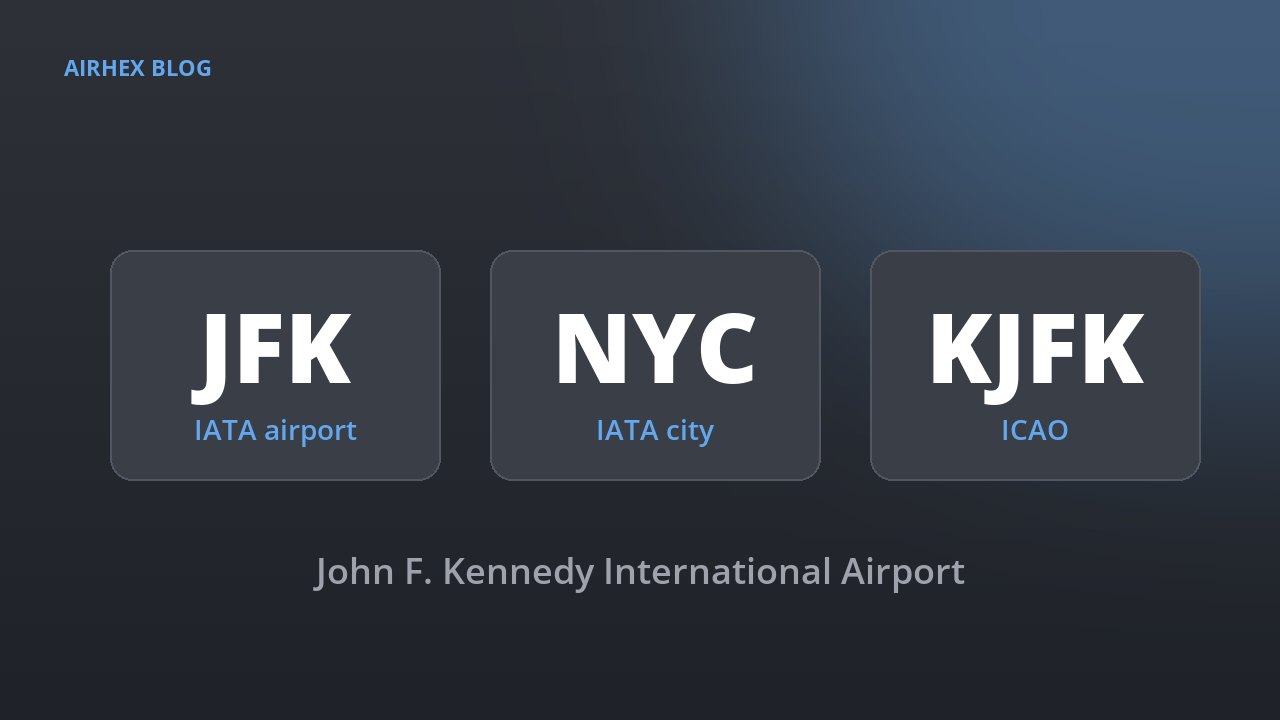
IATA and ICAO codes change differently
Every scheduled airline has two designators:
- IATA code: two characters (
LHfor Lufthansa). Used in bookings, tickets and flight numbers. The space is small, so codes are withdrawn and reused. - ICAO code: three letters (
DLH). Used in flight plans and air traffic control. Far more stable, and a new airline usually gets a new one even when it inherits an IATA code.
That difference matters: after a takeover, the IATA code may stay the same while the ICAO code, the legal entity and often the logo all change.
What a merger or shutdown looks like in the data
| Event | What changed |
|---|---|
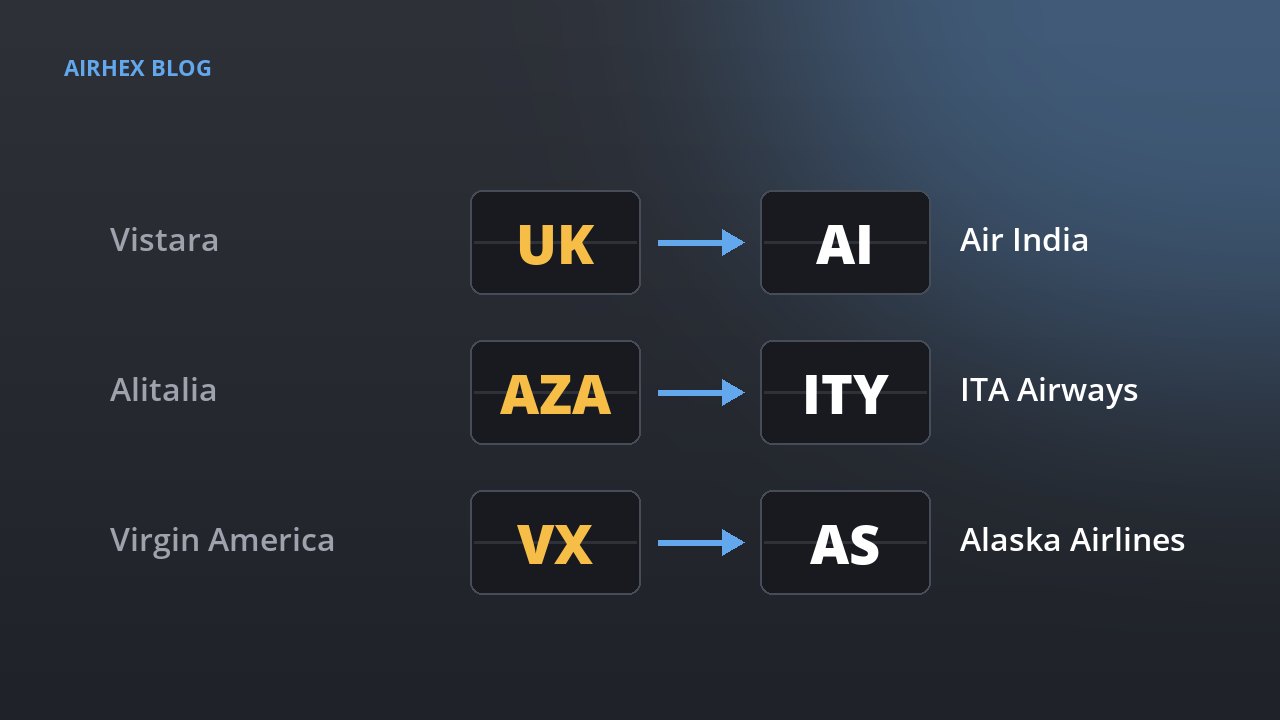
| Vistara merged into Air India (2024) | Vistara's UK flights became Air India AI flights. The Vistara brand, code and logo were retired; existing bookings were moved to Air India. |
| Alitalia replaced by ITA Airways (2021) | ITA Airways took over the AZ code, but it is a different airline with a new ICAO code (ITY instead of AZA), a new name and a new logo. |
| Virgin America merged into Alaska Airlines (2018) | VX flights moved to AS. The Virgin America name, code and logo disappeared. |
| Continental merged into United (2012) | CO flights moved to UA. The CO code was later assigned to other carriers. |
| SAS changed alliance (2024) | No code change at all, but SAS left Star Alliance for SkyTeam, so every alliance badge, filter and loyalty hint had to change. |
Even this short list touches codes, names, logos, alliances, loyalty programmes and flight-number ranges. A product that only updates the airline name gets most of it wrong.
Launches and closures count too
Mergers get the headlines, but the steady stream of new and closing airlines matters just as much. According to IATA, 28 new airlines started flying in 2024 and 19 stopped, both the lowest in a decade. Each is a change your product has to pick up at the right moment:
- Launch: a new airline needs its codes, name, logo and links in place before its first flight is sold, or its flights appear as bare codes and you miss demand from day one.
- Operation: rebrands, alliance changes, new websites and new check-in links.
- Closure or merger: mark the airline as ceased, link its successor, and stop offering it in filters. A closure and a launch can be the same story: when Air Malta stopped flying in 2024, the new KM Malta Airlines took over its
KMcode.
What goes wrong when you fall behind
- Defunct airlines in results: a search still offers "Vistara" filters or shows its logo on Air India flights.
- The wrong airline on a reused code: anything that still says
COmeans Continental is wrong today. - Broken history: if you simply rename the old record, your reports claim ITA Airways flew Alitalia's flights in 2015.
- Dead links: check-in, baggage and manage-booking links for an airline that no longer exists.
- Support load: every mismatch turns into a "which airline am I flying?" ticket.
How to handle airline changes properly
Keep the old airline as its own record
Don't rename Alitalia to ITA Airways. Mark Alitalia as ceased, give ITA Airways its own record, and store the relationship ("successor of"). Historical bookings keep the right airline, and new ones resolve to the current one.
Give codes validity dates
Record when each airline held each code. A lookup for AZ on a 2019 date returns Alitalia; on a 2024 date it returns ITA Airways. The same structure handles codes shared by two airlines at once; see our guide to duplicate IATA codes.
Update everything attached to the airline
When a merger lands, check the name, logo, alliance, loyalty programme, check-in and baggage links, brand colours and any marketing copy that mentions the airline. A checklist per airline change avoids "new name, old logo".
Watch for announcements, then confirm the date
Mergers are announced months ahead, but the switch happens on a specific day. Schedule the change for that day instead of updating early or late.
Automate the boring part
Manually tracking IATA bulletins, press releases and airline websites doesn't scale past a handful of airlines. Pull airline data from a maintained source every day, diff it against yesterday's copy, and only review what changed.
Where Airhex fits
The Airhex airline database is checked daily against official directories, GDS data, airline websites and announcements. Each airline has a clear status (active, ceased, merged), reused codes are linked to their past and present holders, and logos and alliance data are updated along with everything else. Every change is listed in our recent changes feed, and you can check any airline's current status with the airline status API.